
Keeping CDT current is not busywork. It is one of the fastest ways to prevent avoidable denials, reduce back-and-forth attachments, and tighten cash flow when payers are already slow to respond.
CDT 2026 raises the stakes because it is a larger update than many practices are used to. The ADA announced 60 total code changes effective January 1, 2026: 31 new codes, 14 revisions, 6 deletions, and 9 editorial changes. Many of the additions reflect services that have been happening in operatories for years, just without clean code definitions that match what clinicians are documenting.
Why CDT 2026 feels bigger than prior years
Compared with a more modest CDT 2025 update, CDT 2026 introduces entirely new groups of codes and reworks one of the most denial-prone areas: anesthesia and sedation. Practices that treat pediatrics, place implants, deliver removable prosthetics, or provide in-office diagnostics will see immediate workflow impact.
Here is a practical way to view the update, by change type and what it typically affects.
| Change type (CDT 2026) | Count | What it usually impacts in the practice |
|---|---|---|
| New codes | 31 | Claim selection, documentation templates, fee schedule build |
| Revised codes | 14 | Notes that no longer support the updated descriptor, payer edits |
| Deleted codes | 6 | “Invalid code” rejections, outdated treatment plan templates |
| Editorial changes | 9 | Less clinical impact, still worth updating code libraries |
New CDT codes that will show up fast in day-to-day billing
Many of the new codes are easy to miss because they sit in categories that already had “close enough” options. Payers often do not like “close enough.” When a more specific code exists, they expect you to use it.
Here are several of the additions that are likely to affect general practices, specialty offices, and multi-provider groups:
- D0426 chairside saliva sample collection, preparation, and point-of-care analysis
- D0461 comprehensive testing for a cracked tooth
- D5877 and D5878 duplication of an existing complete denture (maxillary or mandibular)
- D6049 scaling and debridement of a single implant for peri-implantitis (non-surgical, flap-less)
- D6196 removal of an indirect restoration from an implant abutment
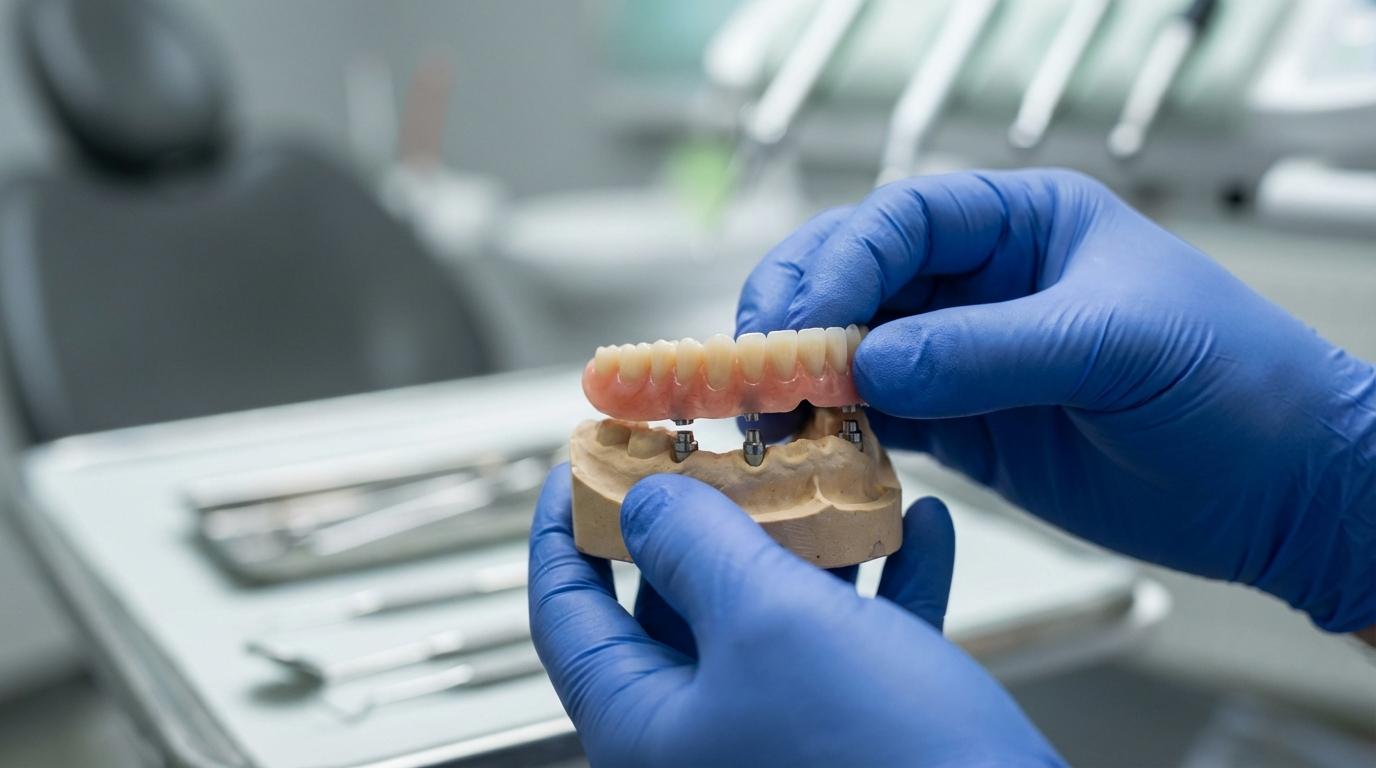
- D6280 maintenance for a removable full-arch implant-supported denture (removal and cleaning, per arch)
- D9936 cleaning and inspection of an occlusal guard
- D9128 and D9129 photobiomodulation therapy, first and each additional 15-minute increment
The pattern is clear: more codes now match what clinicians already do, which is good for accuracy, but only if your notes capture the details a reviewer needs.
Revised and deleted codes that can cause avoidable denials
When a code is deleted, most practice management systems do not stop a team member from selecting it unless your fee schedule and validation rules are updated. When a code is revised, older clinical language may no longer match the descriptor you are reporting.
CDT 2026 includes a few changes worth addressing in staff training early:
- D1352 is deleted. Practices that built habits and templates around “preventive resin restoration” will need to update how they plan and bill those restorations going forward.
- D2391 is revised. The descriptor change removes restrictive language that previously limited use based on lesion depth. That revision is one reason D1352 becomes redundant.
- D9248 is deleted. This is paired with the new, more granular sedation structure, which is time-based and route-based.
- D9230 is revised. Nitrous oxide administration language is tightened to clarify it as a single-agent inhalation, which can matter when audits compare sedation methods to what was documented.
A simple crosswalk helps teams change behavior quickly.
- D1352: move to the appropriate resin-based composite code (often D2391 based on surfaces and clinical scenario)
- D9248: select the new sedation code that matches route, depth, airway, and time increments
- D9230: confirm the note supports nitrous oxide as the single agent inhalation method, not bundled with a different sedation technique
The anesthesia and sedation overhaul: what “time-based increments” means in real billing
If your office provides any sedation beyond nitrous, CDT 2026 changes how you must prove what occurred. The new codes (including ranges like D9224 to D9225 and D9244 to D9247) introduce 15-minute incremental reporting and more detail tied to airway management and sedation route.
That affects three places where claims commonly fail: incorrect code choice, missing time documentation, and notes that do not match the depth or route implied by the code.
Build a consistent documentation workflow so the claim tells the same story as the clinical record:
- Record start and stop times for the sedation service, not just appointment length.
- State the route and level clearly (enteral, non-IV, IV; minimal, moderate, deep; or general anesthesia).
- Document airway management when the code requires it, using your standard anesthesia record language.
- Match the increments by calculating total billable time in 15-minute units based on CDT guidance and payer policy.
- Keep drug details consistent across the anesthesia record, clinical note, and any attachments a payer requests.
A payer does not need a beautiful narrative. They need time, route, level, and medical necessity to be easy to find.
Implant maintenance and peri-implantitis coding: more precision, higher expectations
Implant billing has long been vulnerable to bundling and “inclusive to surgery” denials because older coding options were not specific enough to separate maintenance, debridement, and restoration-related steps.
CDT 2026 tightens this area with additions like:
- D6049 for scaling and debridement of a single implant for peri-implantitis, described as non-surgical and flap-less.
- D6196 for removal of an indirect restoration from an implant abutment.
- D6280 for maintenance of a removable full-arch implant-supported denture, per arch.
These codes can help claims reflect what was actually done, but only if documentation is explicit. Chart notes should identify the implant site, the condition being treated (when relevant), and what was performed that makes the service distinct from a routine prophy or a broader surgical procedure.
If your team currently documents implant maintenance as a single line item, CDT 2026 is a good reason to standardize:
- implant number and arch
- peri-implant diagnosis language consistent with the service performed
- instruments and approach at a high level (enough to support “non-surgical, flap-less” when reporting D6049)
Prosthodontic growth in CDT 2026: duplicate dentures, guidance prostheses, resection prostheses
A noticeable portion of CDT 2026 is prosthodontic expansion, reflecting how common digital workflows and maxillofacial prosthetics have become.
Two additions that may affect general practices and prosth-heavy offices are:
- D5877 and D5878 for duplication of an existing complete denture by arch. The clinical workflow may involve scanning, printing, or conventional duplication, but billing still hinges on documenting that an existing denture was duplicated and which arch was delivered.
- D5909 and D5930 for maxillary guidance prostheses, with and without a guide flange.
CDT 2026 also introduces a new series of resection prosthesis codes (D5938 to D5949) that creates clearer reporting options for complex cases. Even if your office refers these cases out, recognizing the codes is useful when you are coordinating benefits, reviewing a specialist’s pre-auth request, or answering patient questions about what insurance is seeing.
A one-sentence reality check about coverage
New CDT codes do not guarantee payment, so verify plan benefits and payer policies before promising reimbursement.
Claim compliance basics that matter more during a code-year change
January and February are when “small” coding errors become expensive because they stack across every carrier and every provider. CDT 2026 makes technical accuracy more important in three ways.
First, claims must use the code set in effect for the date of service. That matters when you are billing December treatment in January, sending corrected claims, or posting late charges.
Second, CDT requires reporting the code number and descriptor as published, without rewriting code language on the claim. Your clinical notes can be detailed, but your procedure line must be exact.
Third, your internal systems must be ready. The best clinical documentation in the world will not help if the practice management system, clearinghouse edits, or payer mappings still treat new codes as invalid.
A strong transition plan includes updating:
- the practice management CDT library and fee schedule
- clinical note templates and anesthesia records that feed billing
- payer-specific code maps, including any internal “favorites” buttons
- reporting dashboards so production and collections do not break in January
A practical way to prepare your team before January 1
Many practices wait until denials show up to learn what changed. CDT 2026 is large enough that a short, scheduled rollout is faster and cheaper than reactive fixes.
A workable approach for most offices:
- Pick the top 15 codes you will touch: sedation, implant maintenance, diagnostics, occlusal guard maintenance, common restorative crosswalks.
- Update templates first: build documentation prompts for time increments, arch selection, and diagnostic indications.
- Train by scenario: “cracked tooth testing” and “implant debridement for peri-implantitis” are easier to learn as stories than as code lists.
- Run a mini-audit in week two: check that posted procedures match the notes, and that deleted codes are not being used.
Where outsourced billing support can reduce friction during the switch
Some practices handle CDT updates internally and do fine. Others get stuck when coding, documentation, payer rules, and accounts receivable all collide at the same time.
A specialized dental revenue cycle partner like EZDDS Billing can help by taking ownership of the operational side of the transition: keeping code libraries current, reinforcing documentation expectations tied to reimbursement, and following up on payer responses when new codes trigger extra review. For offices that prefer flexibility, month-to-month support and clear pricing can make it easier to get help for the changeover without locking into a long contract.
If you want to keep CDT 2026 from slowing down cash flow, treat it like a system update, not a code book update. The practices that get paid cleanly in January are usually the ones that trained in November.