
Denied dental claims rarely come from one big mistake. They tend to come from small, repeatable breakdowns across eligibility, documentation, coding, and timing.
The good news is that most denial reasons are predictable. When a practice treats denials as a workflow problem (not a one-off annoyance), cash flow stabilizes, rework drops, and the team spends less time searching for missing details.
What a denial really costs (beyond the unpaid claim)
A denial is not just delayed revenue. It is staff time, patient confusion, and often a write-off risk that grows every week the claim sits unresolved.
Denials also create “invisible” scheduling costs. Teams start holding treatment because they are unsure of coverage, or they spend chairside time rewriting narratives that should have been captured the day of service.
Denial reasons you can recognize in 60 seconds
Most EOBs and payer portal messages map to a handful of denial categories. Seeing the category quickly helps you choose the correct fix: correct and resubmit, attach documentation, bill the patient, or appeal.
The table below groups high-frequency dental denial patterns and the fastest corrective action.
| Denial category | What it usually means | Fastest fix that gets traction | Prevention move |
|---|---|---|---|
| Eligibility or coverage not in effect | Patient not eligible on date of service, plan termed, waiting period, missing dependent | Verify eligibility for DOS, confirm subscriber and dependent info, correct member ID, resubmit | Same-day eligibility check tied to appointment date, not “last time we checked” |
| Non-covered service / plan limitation | Procedure excluded, frequency limit reached, missing downgrade handling | Confirm benefits, apply downgrade or alternate benefit rules, update patient responsibility, resubmit if needed | Document plan limitations at check-in and confirm with patient |
| Missing or invalid attachments | X-rays, perio charting, narratives, photos not received or unreadable | Re-submit with correct attachment type, label clearly, reference tooth/date | Standard attachment checklist by procedure, quality check before send |
| Incorrect CDT code or mismatch | Code does not match clinical scenario, tooth/surface mismatch, code discontinued | Correct CDT code, tooth number, surfaces, quadrant, arch, resubmit | Internal code validation rules, periodic coding spot checks |
| Bundling or inclusive procedure | Payer considers one code included in another | Adjust coding if incorrect, add narrative if separate and distinct, appeal with support | Train on common bundling edits and documentation that supports separate services |
| Duplicate claim | Payer thinks it was already processed | Confirm prior submission, correct DOS/provider, request reprocessing if payer error | Track claim IDs and submission dates in one place |
| Coordination of benefits (COB) issue | Primary not billed first, missing EOB from primary, secondary info incomplete | Bill primary, attach primary EOB to secondary, update COB details | Collect other coverage at intake and confirm order of benefits |
| Timely filing | Claim submitted after payer deadline | Appeal with proof of timely submission, correct payer address/EDI if misrouted | Work queues by aging, submit within days not weeks |
| Provider credentialing or network status | Provider not credentialed, NPI mismatch, tax ID mismatch | Correct billing provider, update payer enrollment, refile if allowed | Credentialing calendar, verify rendering vs billing provider setup |
| Missing preauthorization (when required) | Payer required prior auth for the service category | Submit retro review if allowed, appeal with clinical necessity | Identify services needing preauth during treatment planning |
Coverage and eligibility denials: the fastest way to stop “auto-denies”
A large share of denials stem from coverage realities: the patient has no active dental insurance, the plan has a waiting period, or the service is excluded. If the practice did not confirm benefits tied to the exact date of service, the claim can fail even when the patient “has insurance.”
Many practices also run into routine-plan limitations. Cleanings and basic procedures may be covered, while braces, certain oral surgery categories, or upgraded materials may not be. When the plan does not cover it, the denial is often correct, and the best “fix” is clean patient communication plus accurate posting so accounts receivable does not drift.
One sentence that changes outcomes: verify eligibility for the date you will treat, not the date you last spoke to the patient.
Resolving Insurance Eligibility Denials to Ensure Faster Payments
If a payer asks for a narrative, images, or perio charting, they are signaling that the benefit might be payable if medical necessity is supported. These are worth addressing quickly because the clock often matters (timely filing and appeal windows can overlap).
Common triggers include crowns, SRP, perio maintenance versus prophy distinctions, buildup placement, replacement rules, and endodontic versus extraction decisions. The clinical record may be solid, yet the claim fails because the attachment was missing, unreadable, or not clearly labeled.
When resubmitting, match the attachment to the payer’s question. If the denial references missing pre-op radiograph, do not only send a narrative. If it references replacement within time limitations, send proof of prior history, date of placement, and the reason replacement is needed.
Coding and data denials: small field errors that block payment
Many denials are not clinical. They are “data shape” problems: tooth number omitted, surfaces not listed, quadrant mismatch, provider NPI mismatch, place of service issues, or a CDT code that conflicts with the narrative.
A frequent pattern is a correct procedure performed with a code combination the payer edits as inclusive. Sometimes the practice needs to change the code set. Sometimes the practice needs to show that the services were separate and distinct and supported by documentation.
Another quiet culprit is eligibility data that is technically wrong even when coverage is active: transposed member ID digits, missing dependent suffix, wrong subscriber DOB, or using an outdated group number.
Timing denials: timely filing, duplicates, and “lost” claims
Timely filing denials are painful because the clinical work is complete and the fix options are limited. The best defense is speed and tracking.
Duplicate denials are also common. A claim may have been sent twice due to a clearinghouse retry, a manual resend, or a staff member “checking on it” by submitting again. If the payer’s system already logged the claim, the second one can get flagged and slow everything down.
Good claim tracking reduces both issues: record the submission date, payer claim ID, and the last status check in a single view that the whole team can trust.
Coordination of benefits denials: the payer needs the other payer first
COB denials often look like a dead end, but they are usually procedural. The secondary payer needs proof that the primary processed the claim, plus accurate member and plan details.
Even when the patient insists there is only one plan, it is worth confirming. Many COB denials originate from old coverage still on file or a payer database that thinks another plan exists. That leads to “we need primary EOB” messages when there is no real primary.
A quick phone call or portal check can clarify whether the payer wants updated COB, a primary EOB, or a signed patient statement that no other coverage exists.
A practical denied-claim workflow that gets paid faster
Denials move faster when every denial is routed into one of three paths: correct-and-resubmit, documentation-and-resubmit, or appeal. The mistake is treating all denials as appeals, which slows the cycle and burns staff time.
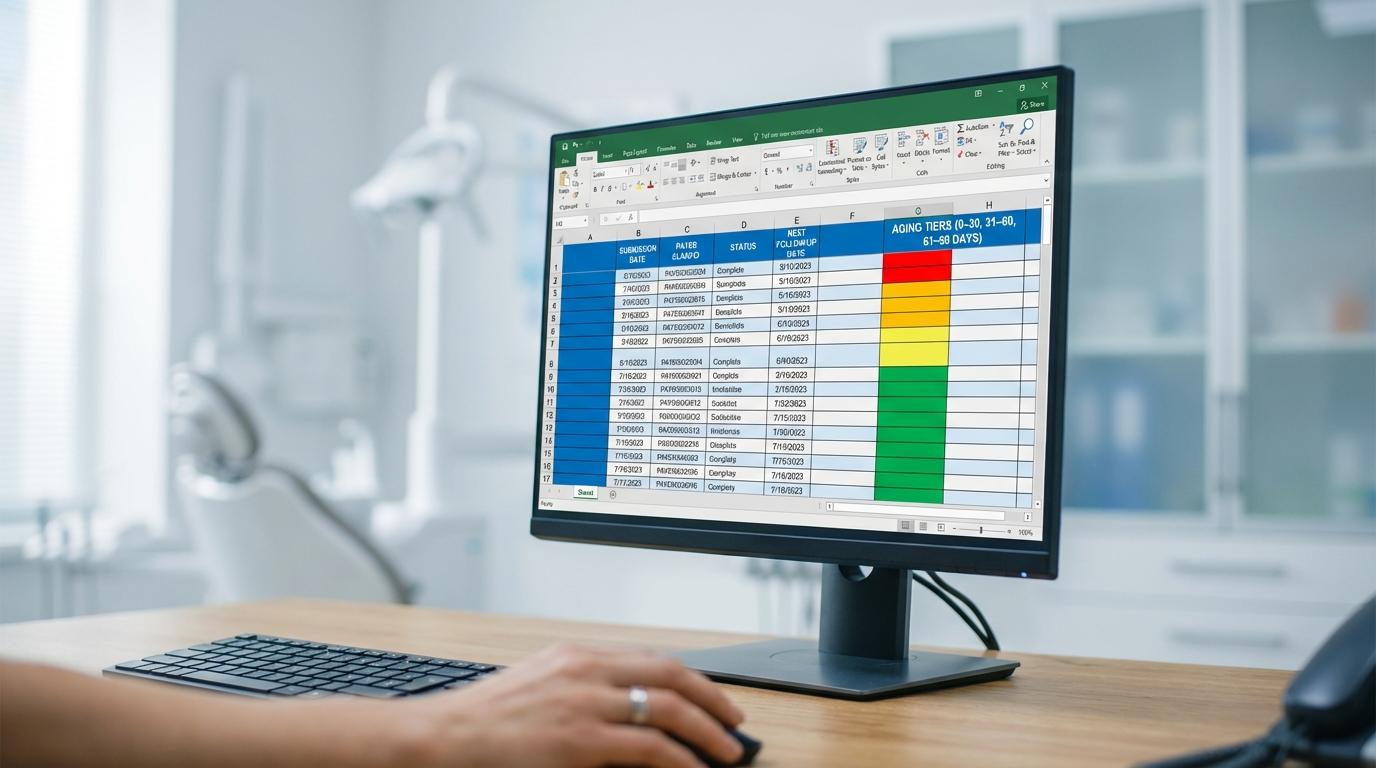
A simple operating rhythm also helps: touch new denials daily, touch older ones by aging tier, and never let “waiting on payer” become a permanent status without a next action date.
Here is a compact workflow many practices use to reduce stalls:
- Triage in minutes: categorize the denial as eligibility/coverage, coding/data, documentation, COB, or timely filing
- Correct once: update the practice management system first, then resubmit so the fix sticks
- Attach with intent: label X-rays, perio charting, and narratives with tooth number and date of service
- Track by deadline: log the appeal window and timely filing rules per payer
- Close the loop: post the denial code, note the root cause, and assign prevention ownership
What to include when a claim truly needs an appeal
An appeal should read like a short, organized case file. The goal is to remove ambiguity and make it easy for the reviewer to approve without guessing.
Before sending, confirm that the issue is appealable. If the plan excludes the service, an appeal usually will not change the benefit. If the denial is due to missing information, resubmission is often the right move.
A strong appeal packet is consistent. It does not rely on long explanations when a clear narrative plus the right clinical evidence will do.
Use a repeatable set of components:
- Cover note: the denial reason, what you are requesting, and the exact codes and tooth numbers
- Clinical proof: relevant radiographs, perio charting, photos, and clinical notes tied to the date of service
- Benefit context: excerpts or references to plan language when you are disputing policy application
- Prior history: dates of prior treatment and why replacement or additional care was necessary
- Submission proof: clearinghouse reports or payer acceptance confirmations when timely filing is disputed
Denial prevention that actually fits into a busy schedule
Prevention is not a quarterly project. It is a few small checks that happen at predictable moments: when the patient is scheduled, when the patient arrives, when the clinical notes are finalized, and when the claim is released.
It also helps to decide what “complete” means for the procedures your practice does most. Crowns, SRP, and limited exams often need more documentation discipline than a straightforward prophy.
A short prevention framework that many teams can adopt:
- Quick verification at scheduling: eligibility for the service date, remaining benefits, frequency limits
- Check-in confirmation: subscriber details, dependent status, other coverage, plan waiting periods
- Chairside capture: narrative-ready notes, materials used, tooth numbers, supporting images
- Claim release control: attachments present, codes match notes, provider and location fields correct
When outsourced billing support can reduce denials and speed up payment
Even strong teams hit capacity limits. Denials require persistence, payer follow-up, and consistent documentation standards, and those tasks compete with patient-facing work.
A specialized dental revenue cycle partner can help by running insurance verification, submitting clean claims, following up on unpaid claims, and managing denial rework in a structured way. EZDDS Billing positions this as an end-to-end model: billing operations, insurance processes, and accounts receivable follow-up designed to reduce errors and accelerate reimbursements, with transparent pricing and flexible month-to-month arrangements.
If your practice is seeing repeat denials in the same categories, the best next step is to map the denial reasons to the stage where they were created (front desk, clinical documentation, claim entry, payer follow-up). That map tells you whether you need a training fix, a workflow fix, a system setup fix, or more dedicated billing bandwidth.
1 comment