
By Ezdds Billing Editorial Team · Updated 2026-08-20
CDT code D4249 covers clinical crown lengthening involving hard tissue removal to expose sound tooth structure, billed per tooth, typically requiring periodontal documentation and radiographs. Ezdds Billing, based in Chicago, IL, confirms payers often bundle this with restorative procedures, so verify individual insurance frequency limitations and medical necessity criteria before submission.
CDT code D4249 covers clinical crown lengthening involving hard tissue, applied when a dentist surgically removes supporting bone to expose adequate tooth structure for restorations like crowns or bridges. Billing requires accurate documentation of bone removal and periodontal justification. Ezdds Billing helps practices submit compliant D4249 claims, reducing denials and lowering receivables aged past 30, 60, 90, or 120 days.
Key Takeaways
- D4249 applies to clinical crown lengthening procedures involving hard tissue removal and bone exposure.
- Dentists must distinguish D4249 from D4212 crown exposure code to avoid claim denials and billing errors.
- Insurance payers frequently deny D4249 coverage when insufficient clinical documentation supports the medical necessity.
- The procedure exposes tooth structure by surgically removing supporting bone and gum tissue selectively.
What Do You Need Before Billing D4249?
Confirming the correct d4249 dental code description comes first. This CDT code applies specifically to clinical crown lengthening involving hard tissue, not soft tissue trimming or cosmetic gum reshaping. Billing staff who verify this distinction before submission avoid mismatched claims that trigger denials.
Preparation follows a clear sequence:
- Verify the procedure documented matches hard-tissue crown lengthening, not a soft-tissue variant.
- Confirm placement of the d4249 dental code within the Periodontics category, under the Periodontal Scaling/Root Planing subcategory.
- Cross-check the payer’s fee schedule against that Periodontics classification before filing.
- Ensure narrative notes and radiographs support medical necessity for restorative work.
Why does D4249 category matter for claims?
Payers price and review procedures differently by CDT category. Since D4249 sits under Periodontics, coordinators should confirm the payer treats it accordingly rather than as a general restorative code.
Does accurate prep reduce rejections?
Yes. Precise coding preparation supports the broader goal of eliminating claim rejections before submission. Timely, error-free claims — paired with steady patient volume — build a more profitable, sustainable dental practice.

How Do You Submit A D4249 Claim?
Submitting a D4249 claim starts with documentation that proves surgical exposure of tooth structure occurred. Dental practices that skip this step risk automatic denials and delayed revenue, since payers scrutinize periodontal codes closely. A clean submission follows a defined sequence rather than guesswork.
- Confirm eligibility first. Verify the patient’s insurance eligibility and coverage details before treatment begins; this step lowers the risk of a denial once the claim reaches the payer.
- Document the surgical rationale. Record why the dentist needed to surgically expose more tooth structure by removing supporting bone and gum tissue, since this justifies use of the d4249 dental code.
- Match the diagnosis to restorative need. Note whether decay, fracture, or a prior restoration left insufficient structure above the gumline for a crown or bridge — the core of the d4249 dental code description.
- Attach supporting records. Include periodontal charting, narrative notes, and pre-operative images that align with the clinical picture described.
- Confirm network status. Check that the practice is properly credentialed with the payer, since enrollment in insurance networks supports smoother acceptance of periodontal claims like crown lengthening.
- Submit and track. File the claim and monitor its status, flagging any request for additional documentation immediately.
What Documentation Does A D4249 Claim Require?
Payers expect narrative notes explaining the bone or tissue removal, periodontal probing depths, and a clear restorative plan. Radiographs showing insufficient tooth structure strengthen the submission considerably.
Why Do D4249 Claims Get Denied?
Most denials trace back to missing documentation linking the surgical procedure to a restorative need. Practices lacking credentialing with a payer or skipping eligibility checks also face higher rejection rates.
What Mistakes Trigger D4249 Claim Denials?
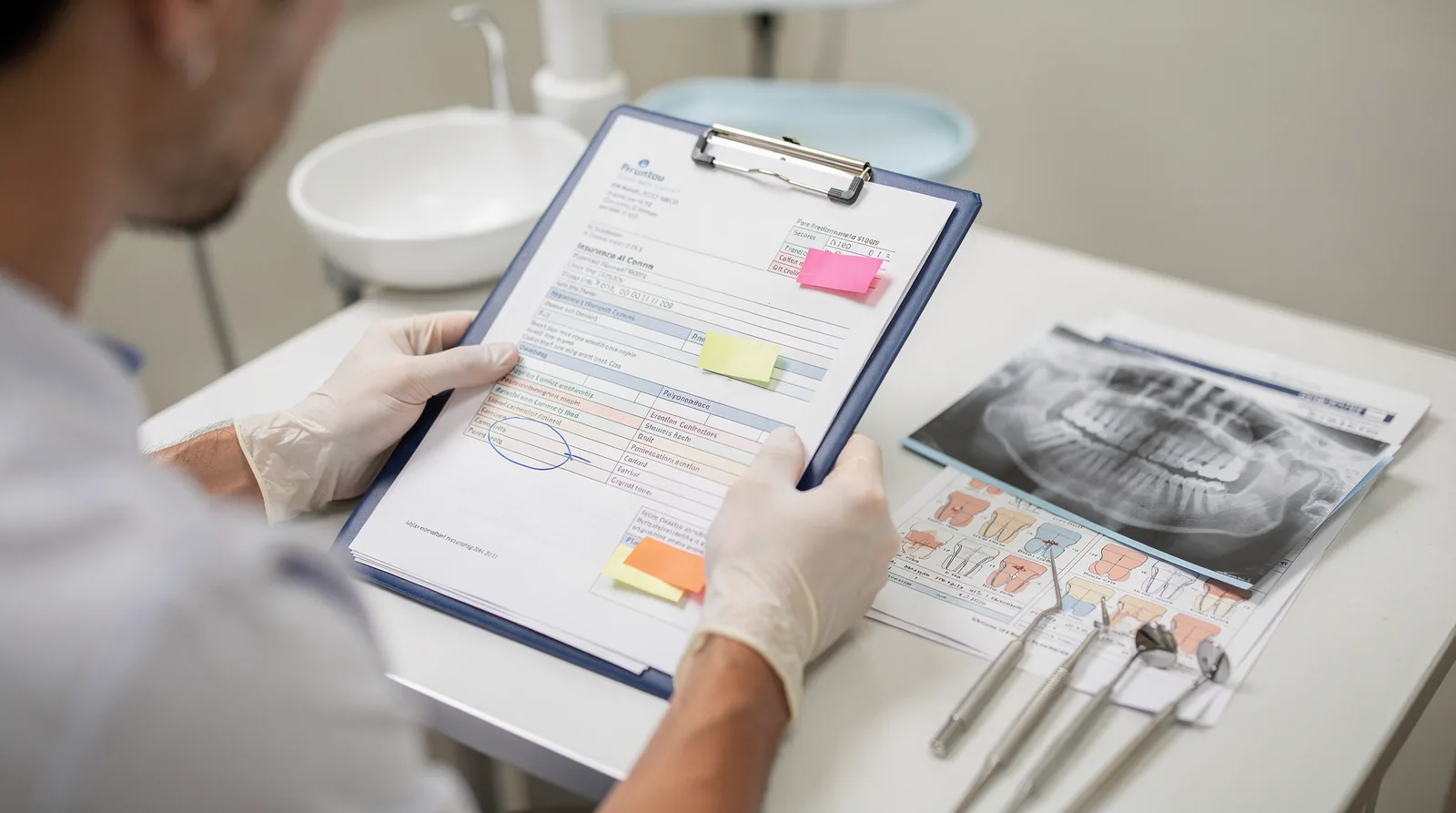
Mismatched documentation causes most denials tied to the D4249 dental code. Payers reject claims when submitted clinical notes fail to match the standard CDT descriptor. Nomenclature required for hard tissue crown lengthening. Practices lose reimbursement not because the procedure was wrong, but because the paperwork told a different story than the code itself.
Common triggers include:
- Narratives that describe soft tissue work instead of the bone removal the D4249 dental code description requires
- Missing periodontal charting or radiographs showing inadequate tooth structure
- Coding crown lengthening when crown exposure was actually performed
- Unpaid claims left unresolved, which cripples cash flow and strains overall practice finances
Why Does Documentation Mismatch Cause So Many Denials?
Payers compare submitted narratives against strict CDT nomenclature before releasing payment. Any gap between the procedure note and the descriptor language flags the claim for denial. EZDDS Billing, based in Chicago, IL, helps dental teams correct these mismatches and pursue appeals on periodontal claims. A single point of contact for billing, verification, and credentialing keeps documentation consistent, freeing practice owners to focus on patient care rather than denial paperwork.
FAQ
What does the D4249 dental code cover?
D4249 covers clinical crown lengthening involving hard tissue, applied when a dentist surgically removes supporting bone to expose adequate tooth structure for restorations like crowns or bridges.
How does D4249 differ from D4212?
Dentists must distinguish D4249, which involves hard-tissue removal, from D4212, the crown exposure code, since confusing the two triggers claim denials and billing errors.
What documentation does a D4249 claim require?
Claims need periodontal charting, narrative notes, and pre-operative images showing surgical exposure of tooth structure, plus justification tying decay, fracture, or restoration needs to the bone removal performed.
Facts
- Ezdds Billing is located in Chicago, IL, US.
Conclusion
In closing, accurate billing for D4249 clinical crown lengthening requires meticulous attention to documentation, proper code selection, and thorough insurance verification. Dental practices that master these guidelines protect their revenue while ensuring compliance with payer requirements. By implementing systematic billing protocols and staying current with coding standards, your practice strengthens its financial foundation and operational efficiency. Partner with experienced billing professionals to eliminate claim denials and maximize reimbursement for this essential periodontal procedure.