
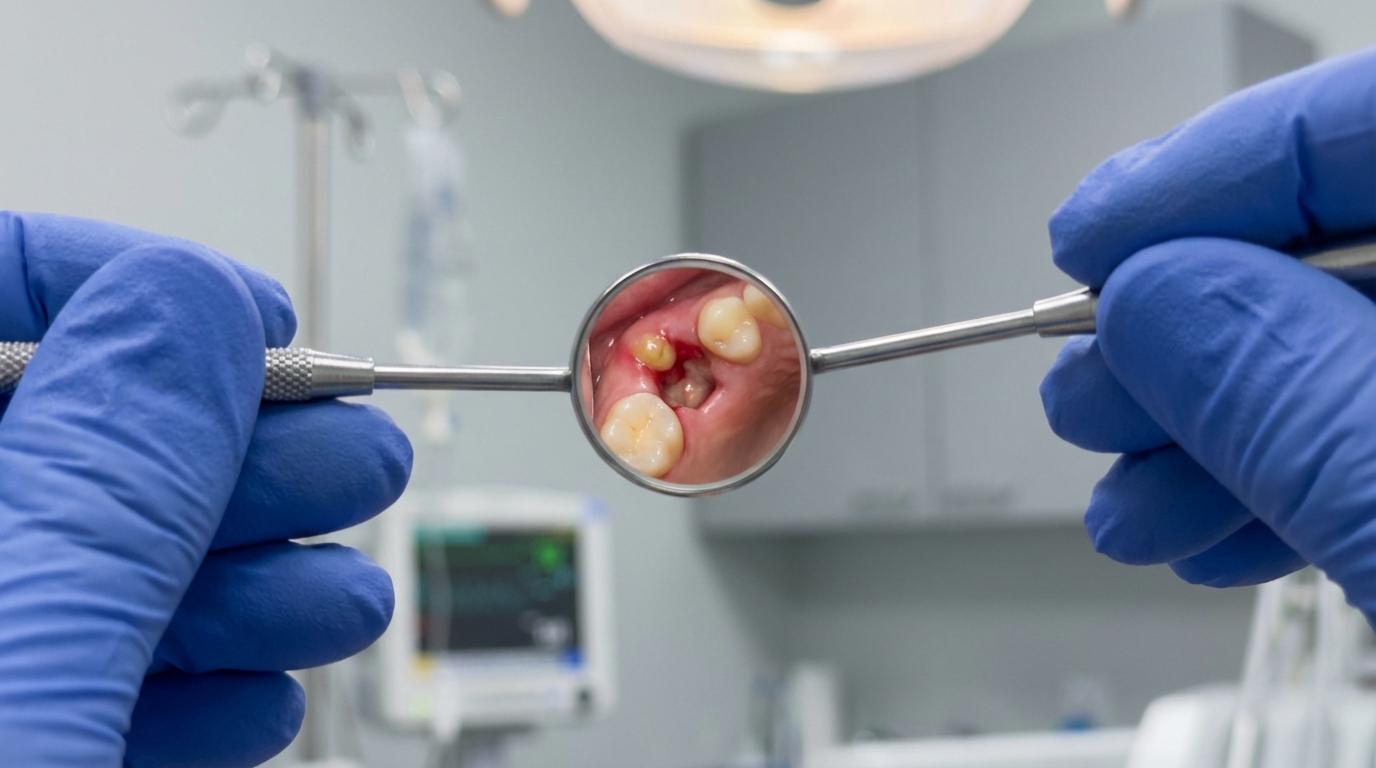
Medical billing for dental procedures sits in a narrow but valuable space. Bill too little to medical insurance, and the practice may leave legitimate reimbursement uncollected. Bill the wrong cases to medical, and denials, rework, and patient confusion can pile up fast.
The practical question is not whether a procedure happens in the mouth. It is whether that service is tied to a covered medical diagnosis, a medical treatment plan, trauma, pathology, or another health condition that moves the claim outside routine dental care.
When medical billing applies
Most dental services stay on the dental side because they are preventive, restorative, or elective in nature. Cleanings, fillings, crowns for ordinary decay, and routine extractions usually do not belong on a medical claim. Medical billing becomes relevant when the service is needed to diagnose or treat a medical condition, or when it is required before a covered medical procedure can move forward.
That means the same procedure can be dental in one case and medical in another. An extraction for ordinary decay is usually dental. An extraction done to clear active infection before radiation, chemotherapy, organ transplant, or certain cardiac procedures may qualify for medical billing if the documentation clearly ties the treatment to that medical need.
The presence of teeth does not automatically make a service dental-only.
After the chart is reviewed, these are some of the most common situations that should trigger a medical billing review:
- Trauma: facial injuries, jaw fractures, avulsed teeth, and emergency stabilization
- Cancer care support: extractions, infection control, or oral surgery required before radiation, chemotherapy, or tumor treatment
- Transplant or cardiac clearance: dental treatment needed to remove oral infection before a covered medical procedure
- Sleep apnea treatment: oral appliance therapy tied to a documented obstructive sleep apnea diagnosis
- Oral pathology: biopsies, lesion evaluation, cyst treatment, and medically necessary infection management
- Congenital or reconstructive cases: cleft-related care or treatment linked to trauma or tumor resection
Some categories come up often enough that it helps to keep them on a quick-reference chart.
| Scenario | Why medical billing may apply | Key support needed |
|---|---|---|
| Facial trauma | Injury treatment, not routine dental care | Injury diagnosis, imaging, operative notes |
| Pre-transplant dental clearance | Infection control required before medical procedure | Physician request, chart narrative, treatment notes |
| Pre-radiation or oncology clearance | Oral infection must be addressed to support cancer care | Oncology records, diagnosis, medical necessity statement |
| Sleep apnea appliance | Treating a diagnosed sleep disorder | Sleep study, physician involvement, plan rules |
| Oral biopsy or lesion treatment | Diagnostic or surgical care for pathology | Clinical findings, pathology report, CPT coding |
| TMJ-related treatment | Some plans cover specific non-routine services | Payer policy, preauthorization, diagnosis support |
The payer rules that matter most
The first rule is simple: medical necessity must be visible in the record, not assumed. A payer wants to see why the service matters to the patient’s broader health, what diagnosis supports it, and whether the plan covers that type of treatment.
The second rule is just as important: each payer applies its own policy language. Private medical insurers vary widely. One plan may allow oral appliance therapy for sleep apnea with the right documentation, while another may require strict DME rules and prior authorization. One plan may recognize TMJ treatment under medical benefits, while another excludes it.
Medicare is especially strict. Routine dental services are generally excluded. Coverage usually applies only when the dental service is directly linked to a covered medical service, such as certain cancer-related care, jaw trauma, or dental clearance tied to specific medical treatment. If the chart cannot show that connection, the claim is likely to fail.
Medicaid adds another layer because benefits depend on the state, and adult dental benefits vary far more than pediatric benefits. Dental plans also matter because a medically related service may need to go to medical first, with dental billed second if the contract allows coordination.
| Payer type | Usual position | What the practice should verify |
|---|---|---|
| Medicare | Routine dental excluded, limited medical exceptions | Does the case meet a recognized covered medical scenario? |
| Private medical | Policy-dependent | Is the diagnosis covered, and is prior authorization required? |
| Medicaid | State-specific | What does the state allow for the patient’s age and plan type? |
| Dental insurance | Routine dental focus | Should the dental plan be secondary after medical adjudication? |
Building a clean dental-medical claim
A strong dental-medical workflow starts before treatment, not after the denial.
When teams wait until claim submission to decide whether something should have gone to medical, they usually miss documentation, physician records, or authorization requirements that could have been handled at the start.
A practical workflow often looks like this:
- Eligibility: Verify active medical coverage, payer rules, and whether the service has a possible medical benefit.
- Diagnosis review: Confirm the medical condition that supports the claim and make sure it is documented in the chart.
- Authorization: Obtain preauthorization when the payer requires it, especially for appliances, surgery, sedation, or plan-sensitive treatment.
- Code selection: Use ICD-10 for the diagnosis, CPT or HCPCS for the medical procedure, and keep the CDT code in the dental record for internal tracking.
- Claim preparation: Submit the medical claim on a CMS-1500 with the correct provider data, place of service, modifiers, and attachments.
- Follow-up: Track the payer response, post the EOB, bill any secondary coverage if appropriate, and appeal quickly when the denial reason is fixable.
Documentation and coding that support payment
Coding alone does not make a claim medical. The record has to tell the full story.
On the medical side, ICD-10 explains why the patient needs care. CPT or HCPCS explains what was done. CDT still matters inside the dental practice because it reflects the clinical procedure entered into the dental system, but the medical payer will expect medical coding on the claim form. That cross-coding step is where many practices lose time or make avoidable mistakes.
A strong chart note should answer four questions clearly. What medical condition is being treated or prevented? Why is the dental procedure necessary in that context? Who recommended or ordered the care, if physician involvement is part of the case? What supporting records prove the link?
That support may include a physician referral, sleep study, oncology note, imaging, pathology report, hospital record, or a narrative that explains the risk of delaying treatment.
When a claim is reviewed by an auditor or medical claims examiner, vague notes almost never help. “Extraction completed” is weak. “Extraction completed to remove active oral infection before scheduled transplant clearance” is far stronger because it ties the service to the covered medical reason.
Modifier use matters too. If a separately billable evaluation and management service is reported on the same day as a procedure, the note has to support that level of service and the modifier used. The same goes for anesthesia, imaging, or facility-related coding.
Mistakes that cause denials
Most dental-medical denials come from process gaps, not bad intent. The office may have treated an appropriate case, but the claim still fails because the documentation, coding, or timing did not match the payer’s rules.
That is why repeatable systems matter more than one-off effort. Teams need a defined review process for trauma, pathology, sleep, surgery, oncology support, transplant clearance, and any other category they regularly see.
Common denial triggers include:
- Missing prior authorization
- Diagnosis that does not support the procedure billed
- Routine dental care sent to medical
- CMS-1500 submitted without needed attachments
- No physician order when the plan expects one
- CDT code used where CPT or HCPCS is required
- Weak narrative and incomplete chart notes
- Coordination of benefits errors
Denials should also be sorted by reason. If the same rejection shows up month after month, the issue is usually training, workflow design, or claim review standards rather than the payer alone.
When outside support makes sense
Practices with oral surgery, pathology, sleep apnea, sedation, hospital dentistry, or high accounts receivable often reach a point where in-house billing capacity gets stretched. The clinical team may know the treatment well but still struggle with medical policy checks, cross-coding, attachment rules, and appeals.
A dental-focused revenue cycle partner can take on insurance verification, claim preparation, denial follow-up, and aging claims while the practice keeps its attention on patient care and schedule flow. That can be especially helpful when the office wants consistency across locations or needs stronger cash flow without adding more front-office burden.
When evaluating support options, look for a team that works specifically with dental practices, offers clear reporting, uses current coding standards, and provides pricing that is easy to track. Flexible monthly arrangements can also matter because they give a practice room to adjust without a long lock-in period.
For offices that want a single source for billing support, EZDDS Billing offers outsourced dental billing, insurance verification, credentialing, and accounts receivable follow-up with transparent monthly plans and flexible terms. That type of structure can help reduce administrative load while improving claim accuracy and reimbursement speed.
Start with a policy map for your most common cases
One of the best ways to tighten dental-medical billing is to build an internal policy map for the procedures your office already performs. List the service, the medical scenarios that may justify billing, the payer types most likely to cover it, the ICD-10 and CPT or HCPCS codes typically used, and the records required before submission.
Keep it simple at first. Trauma, sleep apnea appliances, oral pathology, and medical clearance cases are a good place to start.
Once that map is in place, staff spend less time guessing, providers get fewer billing questions after treatment, and the practice can make faster, better decisions about where each claim belongs.