
Billing errors in a dental practice rarely come from one big mistake. They come from small gaps that stack up: a missing digit in a member ID, a code entered without the right narrative, an eligibility check that was done last month but not today.
The frustrating part is that these issues often feel random while you are in the middle of a busy schedule. The good news is that most dental billing errors fall into a handful of predictable categories, and each category has a practical prevention method that can be built into everyday workflow.
What billing errors really cost a practice
A claim denial is not only lost time. Industry estimates put the rework cost for a single denied claim at around $60 when you account for staff labor, rebilling, phone calls, and follow-up.
Payment delays also distort your accounts receivable, make cash flow harder to forecast, and can lead to uncomfortable patient conversations if balances sit too long and then get reversed.
One sentence that tends to hold true: when the front end is rushed, the back end pays for it.
The error pattern most teams miss: where the mistake starts vs. where it shows up
Many practices try to “fix billing” inside the billing screen. That helps, but it ignores the reality that the error might begin at scheduling, check-in, clinical documentation, or even during case presentation.
A denial reason may say “missing information” or “not covered,” but the root cause could be a benefits breakdown that never captured a frequency limitation or a waiting period.
Before changing systems or staffing, start by mapping the claim lifecycle in your office: appointment creation, eligibility, clinical notes and attachments, coding, claim submission, payer response, posting, patient billing, and follow-up.
After you document that flow, the recurring errors get easier to spot.
Error #1: Patient demographics and insurance data entry mistakes
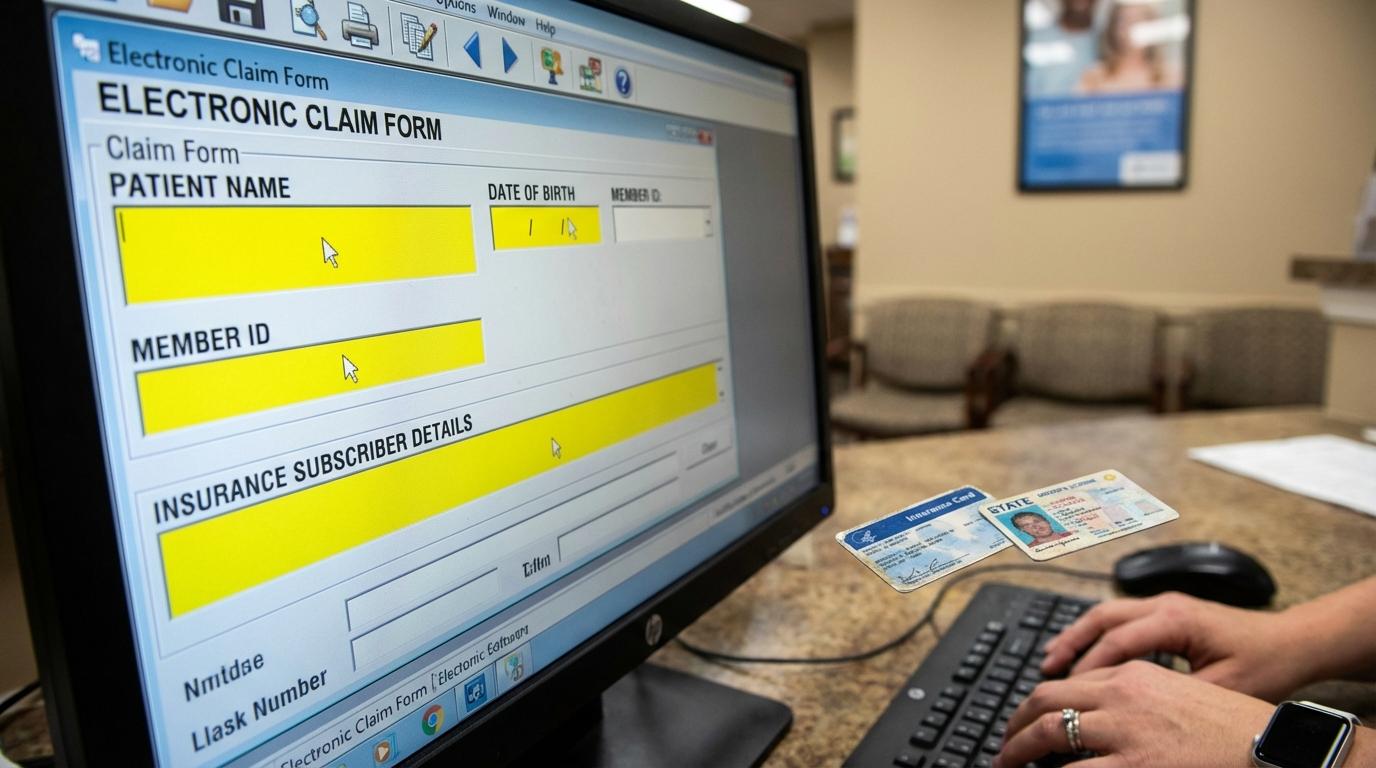
Incorrect patient information is one of the fastest ways to trigger an immediate rejection. That includes misspelled names, wrong date of birth, mismatched subscriber details, outdated addresses, and transposed member IDs.
Some surveys estimate that about one-third of denials trace back to inaccurate patient or insurance information. Even when a payer allows correction and resubmission, the delay can stretch from days into weeks.
Small fixes that work well:
- Use the same intake checkpoints at every visit, not only new-patient visits.
- Scan the card, then still confirm the subscriber name and date of birth verbally.
- Require a second set of eyes for manual entry of member IDs when the payer rejects frequently for eligibility mismatches.
Error #2: Eligibility and benefits were “verified,” but not verified correctly
Eligibility checks can be done and still be wrong for the procedure that was actually performed. A basic “active coverage” response is not a benefits breakdown.
Common breakdown misses include remaining deductible, missing waiting periods, downgrade clauses, alternate benefits, annual maximum remaining, frequency limitations, missing limitations on posterior composites, and missing plan exclusions tied to replacements.
This is where many offices feel they did the right thing, yet claims still deny.
A simple internal standard can reduce this category of denial: confirm benefits close to the appointment date, then confirm again on the date of service for plans that change frequently.
Error #3: Coding and procedure entry issues (CDT, modifiers, narratives)
Coding errors include using the wrong CDT code, using an outdated code set, selecting the right code but pairing it with the wrong tooth or surface, and omitting supporting narrative language when the payer expects it.
Under-coding is just as expensive as over-coding, only quieter. Missed buildup codes, missing separate entries for radiographs, and forgetting to bill for adjunctive services are common sources of underbilling.
Coding errors tend to rise when:
- multiple team members enter procedures
- clinical notes are brief or templated without details
- the practice sees a high mix of plans with different documentation rules
Error #4: Missing attachments or weak documentation
Many payers require attachments for procedures like crowns, certain periodontal therapies, dentures, implant-related procedures, and replacement cases. Missing X-rays, perio charting, intraoral photos, referral notes, or a clear narrative often leads to denials that could have been prevented.
Even when attachments are present, documentation can still be too vague. A narrative that only repeats the procedure name does not help a reviewer understand medical necessity or why a replacement is needed earlier than usual.
Your documentation does not need to be long. It needs to be specific.
Error #5: Coordination of benefits (COB) mistakes
COB errors happen when the wrong plan is billed as primary, a secondary plan is not listed, or subscriber data is mismatched between plans.
COB errors can be especially common in pediatric cases, families with dual coverage, and patients who recently changed jobs. They also spike when a practice does not re-confirm which plan is primary at the start of the year.
The prevention move is operational, not technical: build a repeatable COB confirmation script and require it when two plans are present.
Error #6: Late filing and slow claim submission routines
Some offices still batch claims weekly or only “when there’s time.” That is risky because timely filing limits vary, and the back-and-forth needed to correct an error can eat up the filing window.
Many revenue cycle teams aim to submit claims within 48 hours of the date of service. The main benefit is not speed for its own sake. It is that issues are caught while charts are fresh, attachments are easy to locate, and patient eligibility is still easy to verify.
Submitting faster also prevents a silent backlog where dozens of claims share the same avoidable mistake.
Error #7: Posting errors, adjustment mistakes, and patient statement problems
Even clean claims can turn into messy accounts receivable if posting is inconsistent. Examples include misapplied payments, incorrect contractual adjustments, missing write-off policies, and balances that shift to patients without a clear explanation.
Patient billing errors create more than financial friction. They reduce trust and increase calls, which adds labor costs to the front desk.
A basic posting quality check, done weekly, can prevent month-end surprises.
A quick reference table your team can use
| Error type | What it looks like day to day | Prevention checkpoint |
|---|---|---|
| Demographics and member ID errors | Claims rejected quickly, “patient not found” | Two-step data verification at check-in |
| Eligibility and benefits gaps | Denials for “not covered,” unexpected patient balances | Benefit breakdown tied to procedure, confirm close to DOS |
| Coding and tooth/surface mismatches | Downcoded payments, denials for invalid code pairing | Current CDT references, coding review before submission |
| Missing attachments | Payer requests records, claim pends then denies | Procedure-based attachment checklist |
| COB mistakes | Denials that bounce between payers | Confirm primary/secondary every benefit year and at first visit |
| Late filing | Denials with no appeal path | Daily or near-daily claim submission rhythm |
| Posting and adjustment errors | AR aging climbs, patient complaints increase | Weekly posting audit and standardized adjustment rules |
Building prevention into workflow (instead of relying on memory)
Most teams do not need more effort. They need fewer judgment calls during busy moments. That comes from clear checkpoints, short checklists, and role clarity.
A practical way to structure it is to set standards for three zones: before the visit, during the visit, and after the visit. Each zone should have a small set of required actions that are easy to audit.
Here are a few high-impact workflow controls many practices adopt after reviewing their denial patterns:
- Quick, repeatable scripts for plan verification and COB
- Procedure-based attachment prompts inside the clinical workflow
- A short end-of-day reconciliation between completed procedures and procedures posted
This list format works best when your team can point to it and say, “If we do these every time, denials drop.”
After you identify where your office loses time, use a short, two-part checklist that reinforces the behavior.
- Front desk: Eligibility confirmed with deductible, frequency, and limitations noted
- Clinical team: Notes support the code with a clear why, not only a what
- Billing team: Claim scrubbed for tooth/surface/date accuracy and required attachments
- Posting team: EOB posted with correct adjustments and clear patient balance logic
- Manager: Denials categorized weekly so the same issue does not repeat for months
Denial management: treat every denial as feedback
Denials are painful, yet they are also data. When a practice tracks denial reasons consistently, patterns show up fast: one payer wants narratives for replacements, another rejects claims when the rendering provider field is inconsistent, another frequently flags missing perio charting.
Track denial reasons in a way that is easy to review weekly, even if it is a simple spreadsheet. The goal is not perfect reporting. The goal is to stop repeating the same avoidable mistake.
A short “top three denial reasons” review in a weekly huddle can change behavior quickly because it connects cause and effect while the team still remembers the case.
A 30-day stabilization plan for cleaner claims
If billing errors feel constant, it helps to run a short reset where you narrow focus and measure progress. Most practices can do this without a software switch.
Start by choosing one goal metric and one process metric. A goal metric could be denial rate or days in AR. A process metric could be percent of claims submitted within two business days.
Then run a tight plan:
- Pick your top three denial reasons from the last 60 to 90 days.
- Create one checklist or script per denial reason and assign an owner.
- Audit 10 claims per week for four weeks and review misses in a short meeting.
- Standardize what “done” means for eligibility, attachments, and claim submission timing.
When this works, the office feels calmer because fewer accounts require rescue work.
When outside support can reduce errors quickly
Some practices have the internal bandwidth to rebuild processes. Others are already stretched thin, and “fixing billing” becomes a permanent side project.
Outsourced billing and insurance support can make sense when errors are tied to volume, staffing gaps, training gaps, or inconsistent follow-up. A specialist team can also help keep coding and payer rules current and build repeatable workflows that do not depend on one person’s memory.
EZDDS Billing works with dental practices as a one-window billing and revenue cycle support partner, handling tasks like insurance processes, claims follow-up, and accounts receivable so providers can stay focused on patient care. Many practices also benefit from targeted insurance verification support and structured training resources that reduce preventable denials at the front end.
The fastest improvement usually comes from cleaning up eligibility workflows, tightening documentation habits, and submitting claims on a consistent daily rhythm, then backing that up with denial tracking that your team actually uses.